Peter Thiel’s Antichrist Circus Smacked Down in Rome
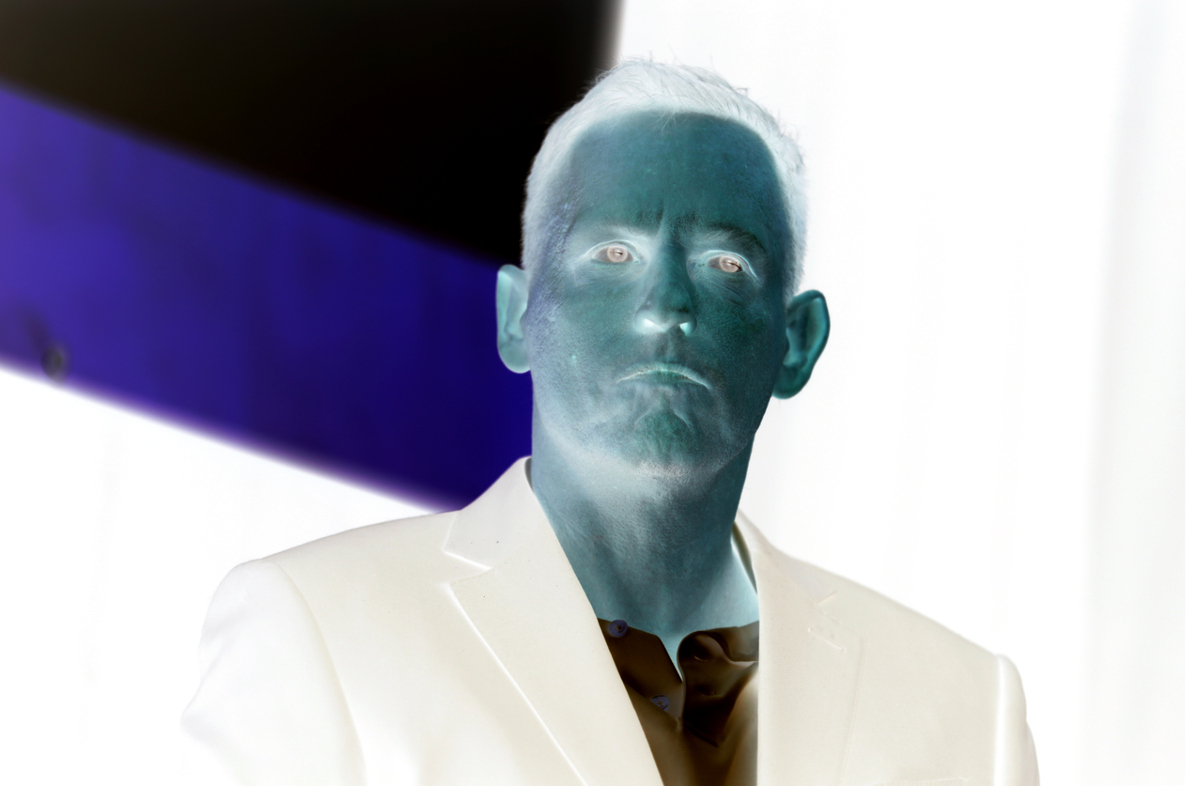
Peter Thiel’s Antichrist lectures have been rejected by theologians and mocked by comedians, but he still cannot stop talking about the Antichrist. This week, the billionaire delivered his trademark four-part Antichrist lecture at a private venue within sight of the Vatican.
At the height of his power—with his companies and allies embedded in Trump’s fascist regime and his protégé, JD Vance, a heartbeat from the presidency—Thiel has launched a campaign to herald the Antichrist. He is on an Antichrist world tour, having given his talks in Austin, San Francisco, England, Austria and, now, Rome.
The Vatican was in no mood to play games with the would-be prophet from Palantir. Paolo Benanti, a priest who has advised Pope Francis and Pope Leo on AI and tech ethics, called out Thiel as a “political theologian operating at the very heart of the Silicon Valley ecosystem” and delivered a scathing rebuke of Thiel’s religious delusions:
Thiel’s entire action can thus be read as a prolonged act of heresy against the liberal consensus: a challenge to the very foundations of civil coexistence, which he now considers outdated.
Benanti hit Thiel where it hurts, zooming in on his persistent efforts to pervert religious ideas into justifications for greed, monopoly, and authoritarianism. He exposes Thiel’s obsessive focus on achieving “the pathological radicalization” of “competition, technology, the individual” to argue against democratic society itself.
It’s clear that Benanti has done a deep study of Thiel and knows exactly what the billionaire is up to with all of this Antichrist talk. The priest hits Thiel for weaponizing René Girard’s theory of mimetic desire—the theory that people learn desire by imitating other people—in a demented search for the “perfect algorithmic implementation” of its destructive force. Benanti points to Thiel’s early investment in Facebook as an effort to create “a device designed to amplify and monetize mimetic desire on a planetary scale.”
He also calls out Thiel’s love for The Sovereign Individual, a 1997 book that taught Thiel “to view technology not only as an instrument of profit, but as a tool for managing the decline of liberal democratic institutions.” Benanti further connects Thiel’s ideas to the TESCREAL movement—“philosophies, championed notably by Elon Musk, see technology as the instrument for transcending the biological and social limitations of humanity.” TESCREAL ideologies like transhumanism and longtermism are Silicon Valley’s true religion. Thiel’s Antichrist meditations attempt to put a Christian mask on these ideas, but Benanti argues that Thiel’s vision is structurally pagan.
I’ve written on these same issues in the New Republic and in this newsletter, and they are the subject of my forthcoming book. Now, with a Papal advisor taking Thiel to task, newspapers around the world are writing about Thiel’s Antichrist sermons.
It is easy to mock Thiel’s fascination with the biblical villain, but keep in mind: he wants the attention. Thiel is consciously seeking to position himself as a figure of religious authority, using scripture and philosophy to preach in favor of a capitalism that murders democracy. He clearly wants to recruit people to his cause, perhaps to start a movement. Still, his public Antichrist obsession seems like a miscalculation, since he is not suited for the role of religious teacher.
Thiel is inarticulate and uncharismatic. His florid arguments have the architecture of a conspiracy theory, weaving together random and disconnected elements to make grand assertions. And those assertions—cosmic and sweeping—are more concerning than convincing.
In fact, his speeches usually hint at the idea that he’s not really a believer but rather someone who understands the power of religious ideas. People willing to believe in serious apocalyptic prophecies are likely not inclined to receive them from him.
It would be much wiser for Thiel to pipe down and enjoy the fruits of Trump’s lucrative fascism in strategic silence. He is saying too much, spelling out Silicon Valley’s plan to weaponize religion in a war against democracy.
Perhaps unwittingly, Thiel is confessing Silicon Valley’s sins and sounding an alarm for all the world to hear. But when a billionaire dreams of being a prophet, few things can stop him from trying—not even a wakeup call from the Vatican.
- Read Benanti’s full piece: “American Heresy: Should Peter Thiel Be Burned At The Stake?”
- Click here for an English translation.
- New York Times: “Peter Thiel Fears the Antichrist Is Coming. In Rome, Some Call His View Heresy.”
- Reuters: Thiel’s secretive Rome conference draws Church attention